
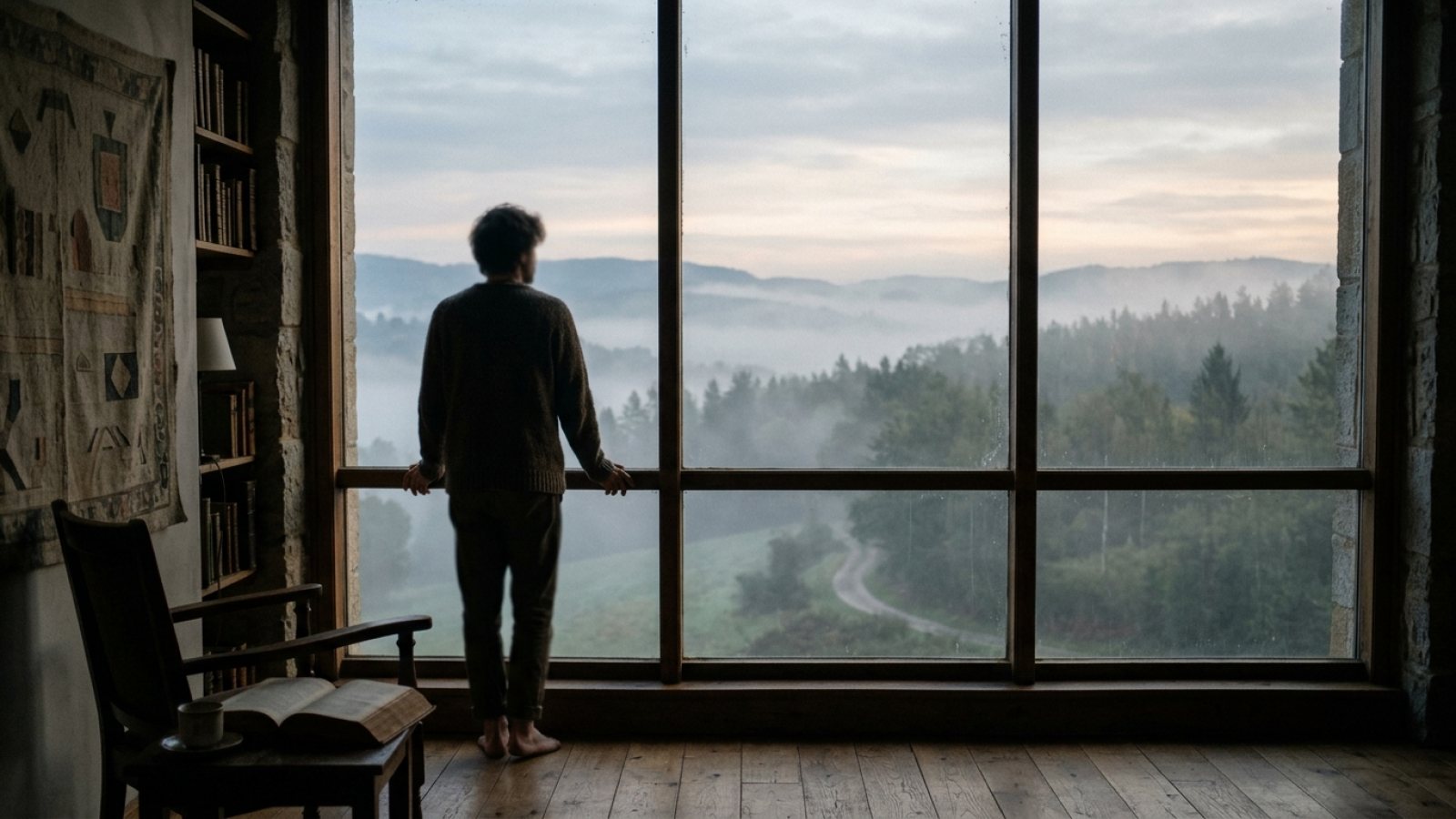
Stillness Without Escape: When the Introverted Intuitive Turns Inward
In a world that often demands constant outward engagement, the introverted intuitive naturally seeks moments of profound stillness. Yet, Carl Jung offered a nuanced caution against simply borrowing Eastern meditative practices without deep consideration for the Western psyche's unique path to wholeness.
The invitation to stillness arrives quietly, perhaps with the fading light of an afternoon or the soft hum of a quiet morning. For the introverted intuitive, this call to turn inward often feels less like a choice and more like a profound necessity, a return to the wellspring of their understanding. It's a desire to perceive the subtle, to trace the nascent patterns and images that rise from the depths of the unconscious, offering insights into possibilities unseen by others. Yet, the path to this inner quiet is not without its unique contours, and Carl Jung offered a timeless caution to those who seek it.
The Inner Glimpse: Introverted Intuition
Jung, in Psychological Types (1921), described introverted intuition as a perception oriented towards the subjective factors of experience. This function is not concerned with the immediate, tangible world but with what lies beneath and beyond it: the implications, the potential, the symbolic content of things. It apprehends inner images, visions, and a sense of what might be, often without a clear logical progression. For those whose dominant function is this introverted intuition, the outer world can feel somewhat permeable, a surface through which deeper currents are always visible. They are naturally drawn to contemplation, to the spaces where these inner perceptions can unfold without interruption.
This natural orientation makes practices of stillness, such as meditation, profoundly appealing. The promise of heightened awareness, clarity, or connection to a deeper self resonates deeply with the introverted intuitive's innate quest for meaning and pattern. However, the nature of this stillness, and what one seeks within it, is precisely where Jung advised a careful, discerning approach.
Jung's Caution: Beyond Borrowed Paths
Jung held a deep respect for Eastern spiritual traditions and practices, acknowledging their profound wisdom and the sophisticated understanding of the psyche they offered. His commentary on Richard Wilhelm's translation of The Secret of the Golden Flower (1929) illustrates this reverence, yet it also contains his vital caution. He argued that simply adopting Eastern meditation techniques wholesale, without understanding the vast historical, cultural, and psychological differences between the Eastern and Western psyches, could be counterproductive, even harmful, for a Westerner. The goal of Eastern practices, as Jung understood it, was often dissolution of the ego into a broader universal consciousness, a path that might bypass the necessary Western task of individuation – the process of becoming a unique, integrated self.
For Jung, the Western psyche, shaped by different cultural and religious histories, needed to confront and integrate its own unconscious contents, including what he termed the shadow, rather than attempting to transcend or escape them prematurely. Uncritically borrowing methods could lead to psychic dissociation, where one might intellectualize or inflate spiritual experiences without grounding them in their own unique personality and life context. This isn't to say inner work is to be avoided, but that the path must be authentic to one's own psychic structure and cultural heritage.
Stillness for Integration, Not Escape
Later type writers, building on Jung's framework, formalized the concept of cognitive function stacks. For the INFJ, introverted intuition (Ni) is typically considered the dominant function, followed by extraverted feeling (Fe). This suggests that while Ni dives deep into subjective patterns and possibilities, its insights are meant to be expressed and integrated through Fe, connecting with others and the collective human experience. True stillness for an introverted intuitive, then, isn't about escaping the complexities of the outer world or dissolving the ego, but about a richer integration of their profound inner perceptions into their everyday life.
The goal is to cultivate a conscious relationship with the unconscious, to allow the images and patterns to rise, be observed, understood, and then brought back into the realm of practical action and relational engagement. This involves a kind of inner discipline where one doesn't merely float in the ether of possibilities but actively seeks to discern what is meaningful and applicable to their specific life circumstances.
Returning to the Everyday
For the introverted intuitive, practicing "stillness without escape" might look like deliberately carving out time for reflective journaling, engaging deeply with a piece of art or music, or simply allowing moments of quiet contemplation to inform their next decision. It is the conscious act of processing the vast internal landscape without allowing it to become a hermetically sealed world. The insights gleaned from these moments of quiet must ultimately serve to illuminate one's path in the world, to enhance understanding, and to inform genuine connection. This way, stillness becomes a powerful tool for individuation, helping the introverted intuitive to build a bridge between their rich inner life and the concrete demands of their daily existence, making their unique perception a gift to themselves and to the world around them.
